EDI Solutions for Manufacturing
Manufacturers coordinate purchase orders, release schedules, invoices, and advance ship notices with suppliers, original equipment manufacturers (OEMs), and distributors every day. Each OEM you supply often maintains its own electronic data interchange (EDI) specifications, timing requirements, and data fields. Reconciling those differences manually pulls your team away from production planning. Our EDI solutions automate the exchange of purchase orders, shipment notices, and invoices with your trading partners, so your team spends less time chasing documentation and more time keeping production on schedule.

What Manual Document Handling Costs a Production Schedule
When purchase orders, release schedules, and shipping notices depend on someone reading and re-entering them by hand; the resulting delay shows up on the production floor, not just in an inbox. In one documented case, a manufacturer's order processing time dropped from eight minutes to thirty seconds after moving from manual handling to EDI, a difference that compounds across hundreds of orders a week.
The problem compounds further when your OEM customers each maintain their own EDI specifications. Timing requirements, additional reference data like release authorization numbers, and version-specific formatting vary from one OEM to the next, and few enterprise resource planning (ERP) systems handle those differences natively without manual workarounds.
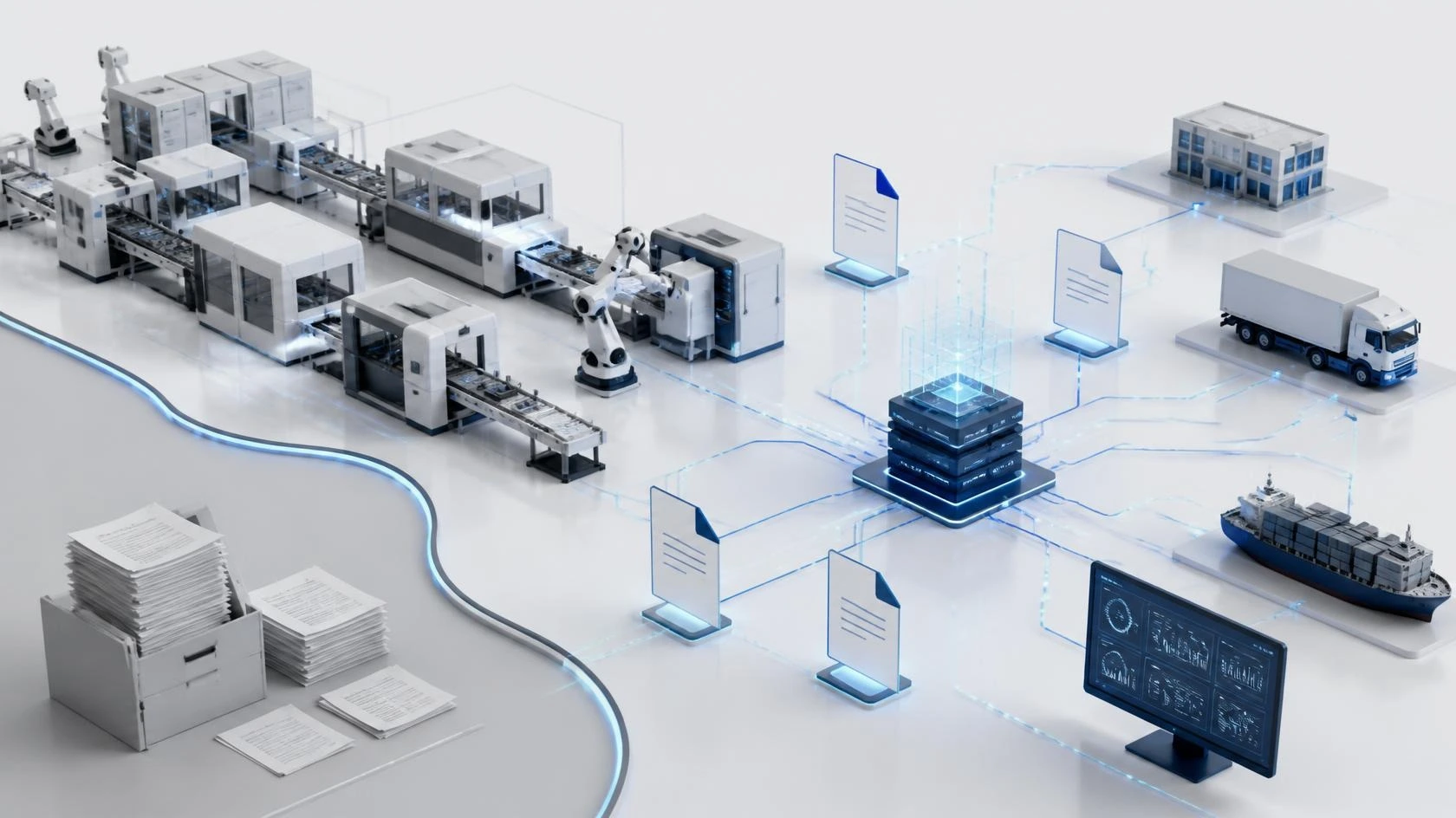
Automate the Documents That Keep Production on Schedule

Purchase Orders and Release Schedules
We automate EDI 850 (Purchase Order) and 830/862 (Planning Schedule and Shipping Schedule) transactions, so your production planning reflects real demand signals instead of a delayed email or phone call.

Order Acknowledgments and Confirmations
We configure EDI 855 (Purchase Order Acknowledgment) so your suppliers and customers get instant confirmation of pricing, quantity, and delivery terms, reducing the disputes that come from mismatched expectations later in the order cycle.

Advance Ship Notices and Shipment Data
We build EDI 856 (Advance Ship Notice) transactions to your OEM customers' specific requirements, including any reference data like release authorization numbers that many manufacturers currently track manually.

Invoicing and Payment Reconciliation
We automate EDI 810 (Invoice) transactions and align them with your purchase order and shipment data, cutting down on the mismatches that trigger short payments or deduction disputes.
From OEM-Specific Requirements to a Reliable Integration

OEM specifications rarely align with one another. We document each partner's timing rules, reference data requirements, and version differences before building your integration, so the connection reflects their actual specification rather than a generic template.

For manufacturers supplying under just-in-time or scheduled call-off arrangements, we configure your integration to handle release quantities and delivery timing precisely, since a call-off your team misses or misreads affects your customer's line directly.

Our team tests each connection against realistic order volumes and OEM-specific edge cases before go-live, so issues surface during testing rather than during an active production run.
When to Modernize Your EDI Setup
Revisit your EDI setup when you are onboarding a new OEM or major customer, when an existing partner updates their specification or transaction requirements, when your current setup falls behind order volume, or when your team has started manually tracking reference data that should flow automatically.

Common Questions About EDI for Manufacturing
Which EDI transactions matter most for manufacturers?
The most common are EDI 850 (Purchase Order), 855 (Purchase Order Acknowledgment), 856 (Advance Ship Notice), and 810 (Invoice). Manufacturers working under scheduled call-offs also commonly need 830 or 862 (Planning and Shipping Schedules).
How do we handle different EDI requirements across multiple OEMs?
We document each OEM's specific implementation guide separately and build your integration to route the correct format and timing rules per trading partner, rather than forcing one generic template across all of them.
What is a release authorization number, and why does it matter?
It is reference data some OEMs require for traceability on scheduled deliveries. We configure your integration to capture and transmit this data automatically instead of relying on manual entry, which is a common source of delivery errors.
How long does it take to onboard a new OEM trading partner?
Timelines depend on that OEM's specific EDI requirements and how many transaction sets the onboarding covers. We provide a specific timeline once we've reviewed their implementation guide.
Can EDI integrate with our existing ERP and production planning systems?
Yes. We connect your EDI transactions directly to your ERP, so purchase orders, schedules, and shipment data flow into production planning without manual re-entry.
What happens if an OEM changes their EDI specification?
We update whatever mapping the change affects and retest the connection before it goes live.
How does EDI support just-in-time manufacturing?
EDI transmits release schedules and call-offs directly into your planning system in real time, reducing the lag between a customer's demand signal and your production response.
What are common signs our current EDI setup is falling behind?
Recurring errors with a specific OEM, manual workarounds creeping back into the order process, or extended delays onboarding a new trading partner are common indicators.
What should we prepare before starting an EDI implementation?
Gather each trading partner's EDI implementation guide, identify which transaction sets and reference data each one requires, and have a point of contact who understands your current ERP and production systems.
Can EDI reduce invoice disputes with OEM customers?
Yes. Automating invoicing and aligning it with purchase order and shipment data reduces the mismatches that commonly trigger short payments or deduction disputes.
What happens during the testing phase before go-live?
We run test transactions against each OEM's specific requirements, checking formatting, data accuracy, and correct handling of any reference data before authorizing production traffic.
How do we maintain EDI connections after go-live?
We monitor transaction flow for errors and update mappings as your trading partners' specifications evolve, so your integrations stay reliable as your OEM relationships change.