Security By Design- Part 11
Contributors


The U.S. Cybersecurity and Infrastructure Security Agency defines “Secure by Design” to mean that technology products are built in a way that reasonably protects against malicious cyber actors successfully gaining access to devices, data, and connected infrastructure.
This is a very concise statement, with a focus on the design of technology-based systems. In the real and practical world we live in, focusing only on the security design aspects of complex digital systems or the components that complex digital systems are made of will ensure that your digital business world will be insecure.
Security focusing only on Design aspects of Complex Systems will ensure Cyber Insecurity
My personal views about Security by Design are well known by those who have worked with me or have been my clients throughout my career. Our digital systems do not stand alone as technology systems only. As soon as we deploy technology, the technology enters the realm of becoming a system, interconnecting, and interacting with other systems with which our business operates. These business systems are comprised of benevolent technology, people, and processes interconnecting our business with our customers and suppliers, as well as the shared open systems we use, such as the World Wide Web and the Internet. Unfortunately, bad actors also use the open and shared internet and World Wide Web systems with the sole purpose to compromise our business operations. So, … focusing only on the secure design of technology products is not enough to secure our Businesses by Design.
Focusing only on the secure design of technology products is not enough to secure our Businesses by Design
Securing our Business by Design requires hyper-attentiveness to the security of the complex digital systems environment of Technology, Data, Processes, and People.
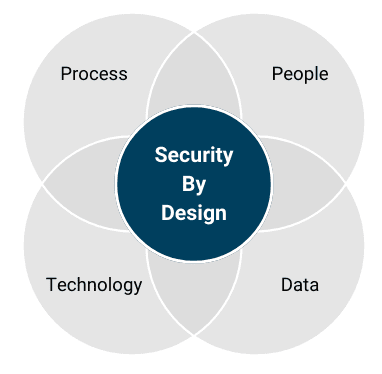
By the very nature of how complex digital systems work, Security by Design requires that all aspects of security design and operations work in concert continually. Any gaps, mistakes, or lack of attentiveness by those who use, support, or operate our systems, including those responsible for oversight and assurance, will guarantee a cybersecurity compromise.
Security by Design
- Technology / Data
- Technology / Process
- Technology / People
- People / Process
- People / Data
- Data / Process
The February 2024 “cyberattack” triggered a shutdown of Change Health Care’s electronic medical claims processing systems, leaving doctors and other providers of medical care (pharmacies, rehabilitation facilities, etc.) without the ability to obtain insurance approval for patient services, and thus not receive payment for medical services, was a failure of the People / Process / Technology aspects of Security by Design. It has been reported that an absence of multi-factor authentication reportedly left a remote access application exposed. The actual bad actor access has been confirmed to have occurred using compromised user credentials via the remote access application. But I ask, is this the true or root failure in this incident?
Is the lack of two-factor authentication the root cause of the Change in Health Care Cyber Attack?
From my perspective, the root cause of this cybersecurity failure is found in the Process / People domain of Security by Design. This is a classic failure of people not utilizing audit/controls processes and/or using the appropriate process but not paying attention to the audit/controls information the process identified. Indeed, Change Health Care is a relatively recent acquisition of OPTUM, which is a subsidiary of United Health Care. Prior audits have reportedly highlighted the lack of two-factor authentication at Change Health Care, but this information, it seems, was not acted upon. This was highlighted by Andrew Witty, CEO of United Health Group, who testified at a U.S. Senate Finance Committee hearing examining cyber-attacks on health care and the Change Healthcare attack on May 01, 2024. The cyber-attack has become the costliest in U.S. history. Healthcare Financial Management Association, the auditor for financial analysis of the losses, so far is reporting an expected $6.87 billion in total losses from this breach (including equity loss, legal fees, regulatory fines, class action claims, PR expenses, notification costs, and other expenses). $6.87 Billion in Losses + nearly 1/3 of all Americans impacted!
Joseph F. Norton is a Risk, Security, and Crisis Management professional.
He is a founding member and Qualified Technology Executive of the Digital Directors Network, Chair of the Advisory Board with Next Era Transformation Group, and Chief Security Officer with APF Technologies.
He has served as Chief Security Officer, SVP at Atos, Chief Technology Officer and Head of Operations, SVP at Philips, Chief Technology Officer, SVP at Novartis, Executive-in-Residence with McKinsey & Company, and Chief Technology Officer at McDonald’s. He has also held professional roles during his career with JPMorgan Bank, Oracle, Sybase and Grumman Aerospace Corporation, and the United States Navy.





Other Popular Articles
In the digital age, businesses must adopt an ad
GRC is the capability, or integrated collection
Get the latest insights straight from our desk to your inbox.
Other Featured Articles
Explore More
How to Design Custom Chatbots That Cannot “Make Stuff Up”
Confident AI answers without traceable sources create institutional risk. Learn how Grounded RAG architecture retrieves real documents first and attaches verifiable citations to every response.
Data and AI Solutions Group
Marketing Group view
How Citation-Backed Conversational AI Improves Public Access and Internal Decision-Making
AI without source citations creates real liability. Learn how citation-backed AI brings traceable sources, version awareness, and audit-ready outputs to every institutional decision.
Data and AI Solutions Group
Marketing Group view
OT Ransomware Prevention: Practical Best Practices for Industrial Cybersecurity
Explore enterprise grade OT ransomware prevention strategies, including segmentation, identity control, threat informed detection, and resilient recovery design to protect industrial operations fro
Cybersecurity Solutions Group
Marketing Group view
10 Myths About OT/ICS Security That Put Your Business at Risk
Think your OT network is secure? Learn the 10 most dangerous myths about OT and ICS cybersecurity that leave industrial operations exposed to attacks.
Cybersecurity Solutions Group
Marketing Group view
OT Ransomware Risks and Response for Industrial Systems
Learn why OT environments face higher ransomware risk, how attackers gain access, and how effective detection and response reduce operational impact.
Cybersecurity Solutions Group
Marketing Group view
AI Risk Assessment: Risk Types, Best Practices & More
Explore AI risk types, essential assessment frameworks, and proven best practices to mitigate threats in AI deployment. Learn actionable strategies for secure AI systems today.
Cybersecurity Solutions Group
Marketing Group view
AI Risk Assessment: Everything You Need to Know
Learn essential processes, methodologies, risk types, regulatory requirements, and practical implementation strategies for safe AI deployment.
Cybersecurity Solutions Group
Marketing Group view
Whitepaper: Ransomware Threat Management
Ransomware continues to be a real threat to business operations across all industries, no organization is safe from this threat.
Laszlo S. Gonc
CISSP, First Senior Fellow, DivIHN Cybersecurity Center of Excellence view
Cybersecurity Incident Response Preparedness
An incident response framework provides a structure to support incident response operations. A framework typically provides guidance on what needs to be done, but not on how it is done.
Laszlo S. Gonc
CISSP, First Senior Fellow, DivIHN Cybersecurity Center of Excellence view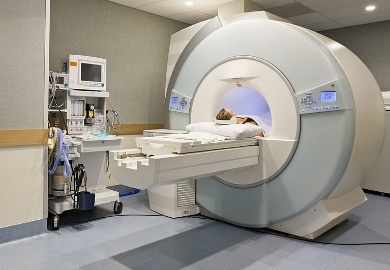
IoT Medical Device Cybersecurity
Healthcare data and medical devices would be aggressively targeted by ransomware attacks since early 2017 has proven to be true