Penetration Testing Services for Your Industry
The average U.S. data breach now costs $11.5 million (IBM, 2026). School districts, agencies, retailers, SaaS companies, law firms, and utilities all rely on apps, cloud, Microsoft 365, remote access, and vendor connections. Penetration testing maps how an attacker could reach critical data through these systems, on a schedule that keeps classes, sales, and services running. Every finding comes with its business impact and a clear fix, helping your IT team act on what matters most.

Why Vulnerability Scanning Alone Isn't Enough
In its 2026 Data Breach Investigations Report, Verizon found that exploiting vulnerabilities overtook stolen credentials as the top way in, at 31% of initial access versus 13%.¹ Your vulnerability scans list what looks weak. A penetration test builds on that list and proves what an attacker can exploit. In one recent SaaS test, changing one number in an API request exposed every customer record on a SOC 2-audited platform.
Source: Verizon 2026 Data Breach Investigations Report, Executive Summary
Your vulnerability scans list what looks weak. A penetration test builds on that list and proves what an attacker can exploit. In one recent SaaS test, changing one number in an API request, every customer record three months after the platform passed its SOC 2 audit. Our testers confirm every critical finding by hand.
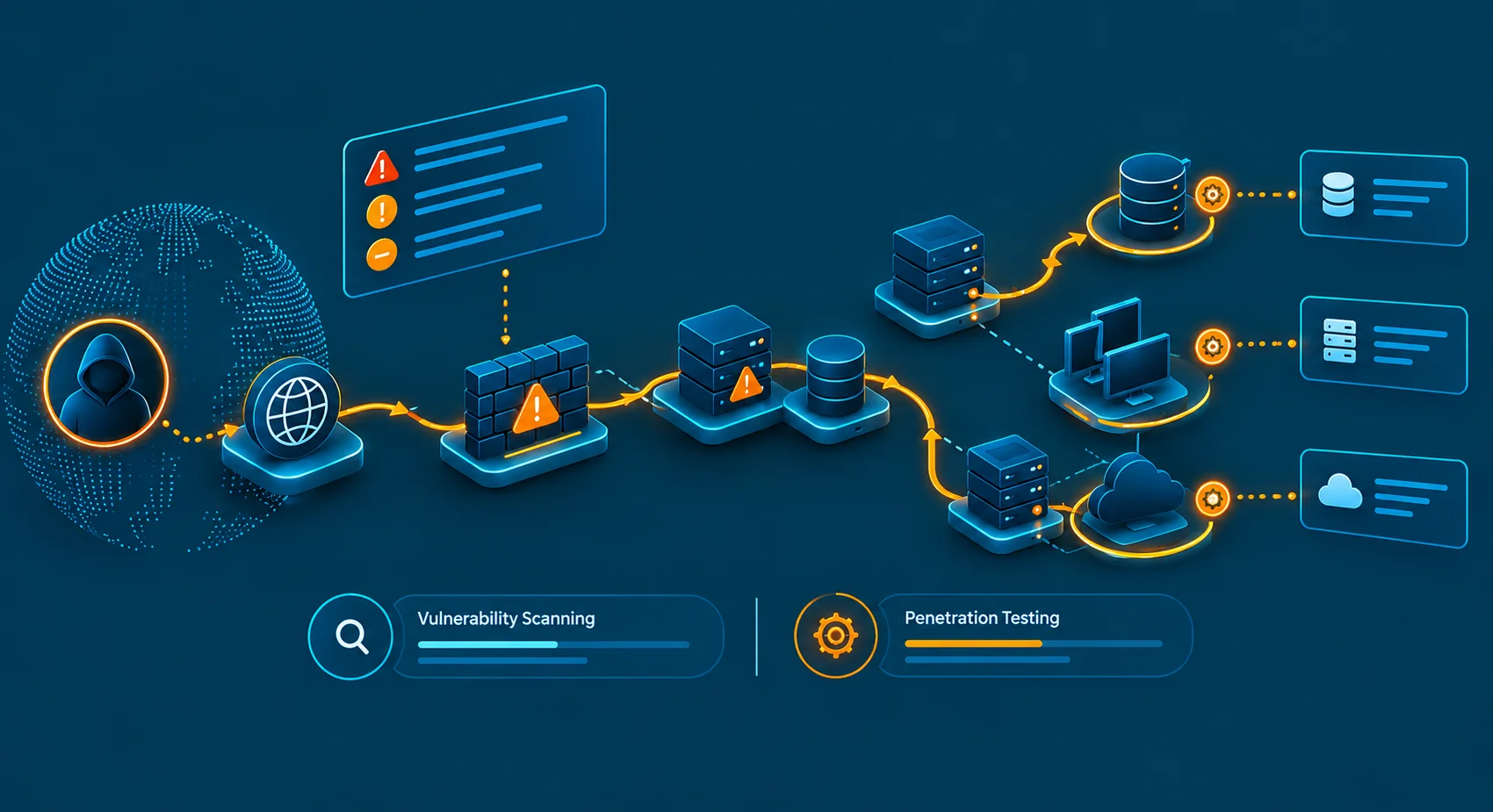
Secure the Systems That Keep Your Business Running

Protect Business-Critical Applications
Testing covers customer portals, e-commerce checkouts, SaaS platforms, and case management systems to find the flaws that expose data or take services offline.

Assess Your Cloud and Digital Infrastructure
Testing reviews AWS, Azure, Google Cloud, Microsoft 365, identity providers, and Active Directory to find the misconfigurations attackers use to move deeper.

Secure Third-Party and Vendor Connections
Testing traces MSP remote tools, vendor VPNs, and SaaS integrations can reach inside your environment, and whether one vendor login opens the door.

Test the Systems Your Industry Runs On
Testing covers retail POS, student information systems, CJIS-connected government systems, and utility control systems (SCADA).
Security Insights That Support Better Business Decisions

Your report shows which weaknesses could expose customer data, take a service offline, or fail an audit, so your team fixes those first.

You get an Attestation Letter to answer security questionnaires, support SOC 2 or PCI DSS audits, and show your insurer at renewal.

Every fix lists its effort and any downtime it needs. Your IT team can plan it around normal operations.
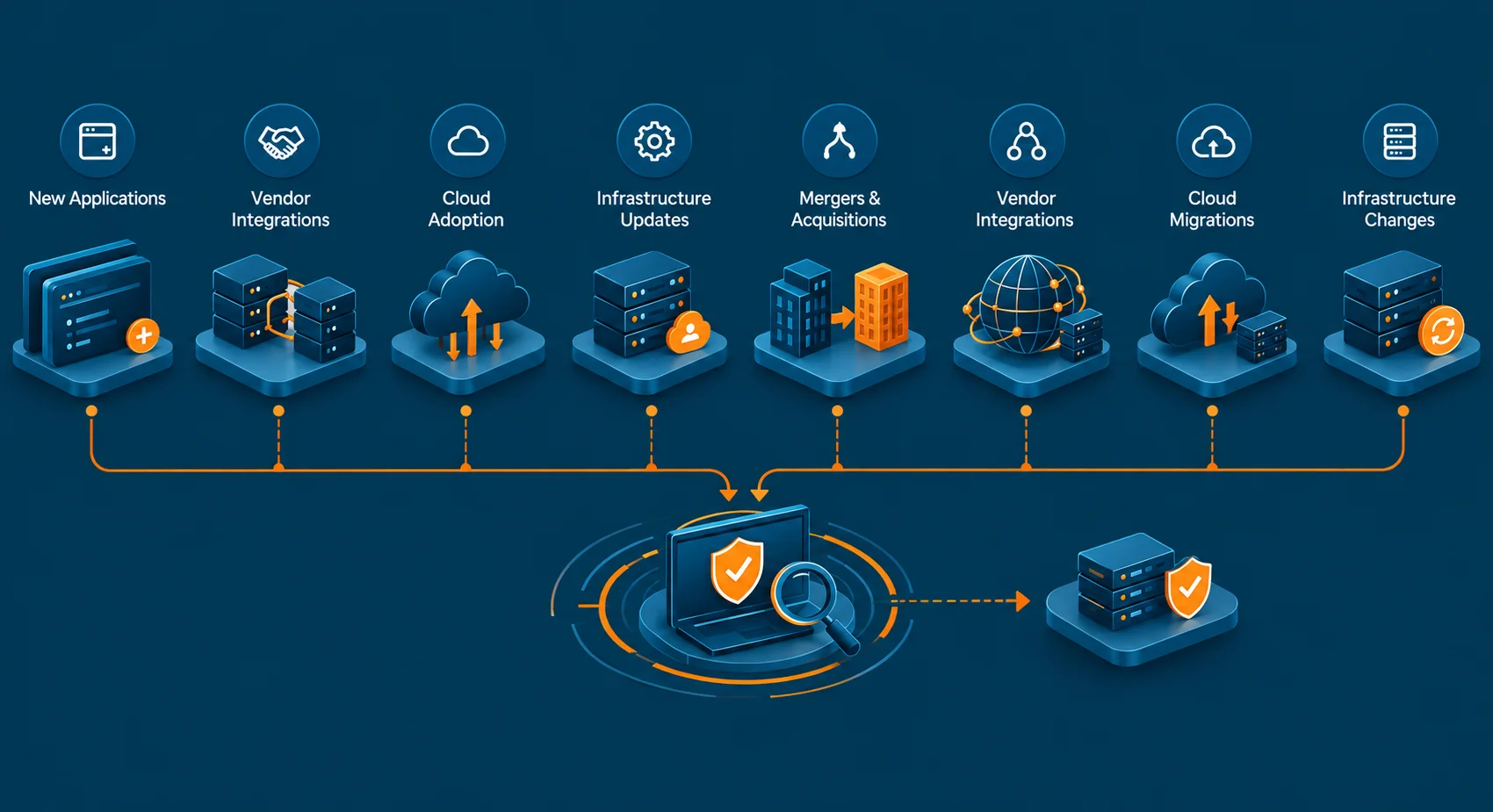
The Best Time to Find a Security Weakness Is Before an Attacker Does
Every new app, vendor login, or cloud change opens another path into your environment. Attackers scan these gaps constantly and move as soon as they find one. Most organizations call us when they’re:
- Supporting a customer security questionnaire or enterprise RFP that asks for a recent pen test.
- Preparing for a SOC 2, PCI DSS, or CJIS audit
- Securing cyber insurance coverage at renewal
- Building a new app, platform, or online service
- Extending operations through a merger, acquisition, or cloud migration
- Strengthening defenses after a breach at a peer, such as a nearby school district or a competing retailer
Schedule the test well before your audit or renewal date so your team can fix gaps and complete the retest on its own timeline.
What Teams Across Industries Ask Before Testing
Do you test organizations outside manufacturing, healthcare, and financial services?
Yes, testing covers government and public sector agencies, education, retail and e-commerce, technology and SaaS, legal and professional services, energy and utilities, and other sectors. Every engagement starts with a threat model built around how your sector operates.
Which compliance frameworks can testing support?
Testing maps findings to the frameworks your sector follows, including PCI DSS, SOC 2, ISO 27001, CJIS, FERPA, the GLBA Safeguards Rule, NIST frameworks, and IEC 62443. Your team confirms the applicable frameworks during scoping.
Can testing help with customer security questionnaires?
Yes, the Attestation Letter and Technical Pentest Report give your team current, independent evidence to answer customer questionnaires and vendor security reviews with confidence.
Does penetration testing support cyber insurance applications?
Yes, many insurers now ask for recent penetration test results during underwriting and renewal. The Attestation Letter gives you clear proof of testing to include with your application.
How does testing work for organizations with small IT teams?
Testing fits teams of any size. Your team names one main contact, testers handle the technical work, and every finding comes with step-by-step remediation guidance your team can follow on its own timeline.
What does the engagement deliver?
Every engagement delivers three reports. Leadership gets a Risk Impact Brief, your security team gets a Technical Pentest Report, and auditors and customers get an Attestation Letter, each with business impact and clear remediation guidance.
Does the engagement include a retest?
Yes, every engagement includes one retest of Critical and High findings at no additional cost, so your team gets verified proof each fix holds.
How long does a penetration testing engagement take?
Most engagements run [X to Y] weeks, depending on the number and complexity of systems in scope. Your team and the testers set the full timeline during scoping, so testing, reporting, and walkthroughs fit your schedule.
What should teams prepare before testing begins?
Your team should identify the systems in scope, share any compliance deadlines or audit dates, name a technical contact, and flag any operational constraints. That gives testers what they need to start fast.
What should our team prepare before a penetration testing engagement?
Your team should identify the systems to assess, define business priorities, nominate key technical contacts, and communicate any operational constraints that the testing team should consider during testing.
Who should be involved during a penetration testing engagement?
Successful engagements typically involve security teams, IT administrators, infrastructure owners, and application teams. Involving the right stakeholders helps streamline testing, validate findings, and accelerate remediation.